
Optical Quality Inspection
The Problem
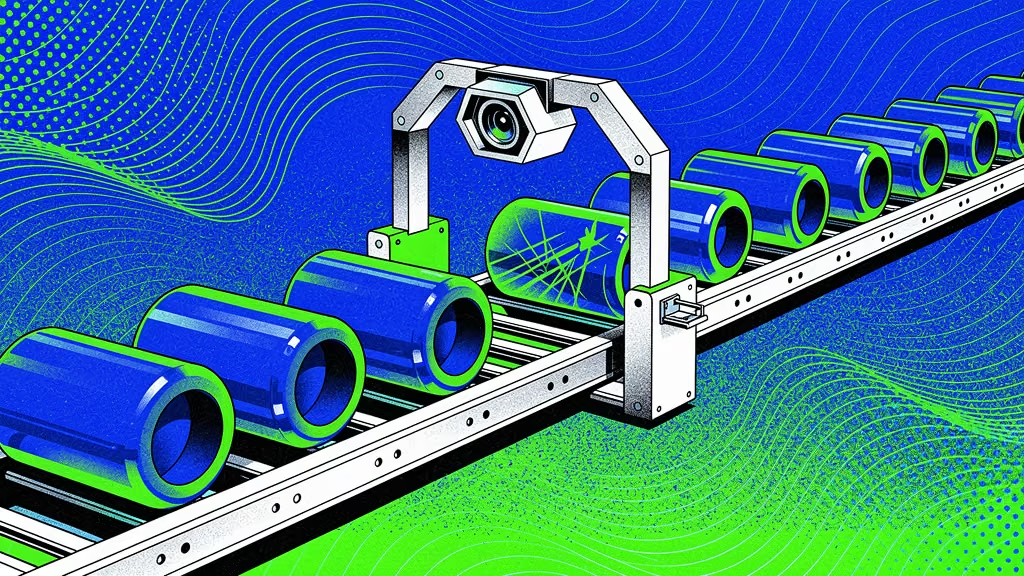
In quality inspection in manufacturing, small scratches, dents, pores, cracks or shape deviations in seals, high-gloss parts, precast concrete elements and precision components are often difficult to detect consistently in manual visual checks. Visual quality inspection ties up skilled staff, slows material flow and leads to inconsistent decisions in borderline cases. Late defect detection increases scrap, rework and complaint risk.
What We Deliver
Artificial intelligence automates optical quality inspection in production by analysing camera images of parts and surfaces in real time. An AI system detects typical defect patterns such as scratches, dents, voids, chips, geometric deviations or missing features and flags suspicious parts for review or removal. This creates automated quality inspection for inline inspection, surface inspection and visual quality inspection while documenting decisions consistently. It strengthens quality inspection in manufacturing environments and provides reliable data for traceability and root-cause analysis.
The Business Impact
Quality cost reduction is created when defects are detected during optical quality inspection in production instead of later in rework, complaints or warranty cases. Automated quality inspection reduces faulty shipments, lowers the effort for manual reinspection and prevents entire batches from becoming costly because surface inspection happened too late. At the same time, documented visual quality inspection stabilises quality costs across sites and production runs.
The Strategic Value
- Automation: Optical quality inspection takes over repetitive visual checks on seals, high-gloss parts, precast concrete elements and precision components directly within the production flow.
- Speed: Inline inspection evaluates camera images in real time and flags deviations immediately before defects multiply through downstream process steps.
- Scalability: A trained AI system can be transferred to additional product lines, defect classes and inspection stations without increasing inspection effort in proportion.
AI Use Cases
Similar Challenges

Automate Product Data Management
Automate RAMS

Payroll Knowledge Base
Optical Quality Inspection
IT Helpdesk Agent

Optimized Bottleneck Management

Intelligent Service Ticketing

Intelligent Knowledge Search

Intelligent Master Data Validation
Optimise Lending Intelligently
Sales Meeting Notes
Churn Analysis and Customer Reactivation
Automated Invoice Checking
Utility Bills Analysed Intelligently

Draft Statements Faster
Intelligent Demand Planning
Automated Audit Report Review
Precision Production Planning

Automate Complaint Management

Intelligent Workforce Scheduling

More Accurate Project Planning

Automate Timesheet Processing

Accurate Call Centre Staffing

Predictive Maintenance

Automated Talent Management



















Ready when you are
Zukunft beginnt, wenn menschliche Intelligenz künstliche Intelligenz entwickelt. Der erste Schritt ist nur ein Klick.
Since 2017, we have been building AI systems that transform businesses. Let's talk about yours.


AI Consulting
AI Development
AI Operations
Formats
Company
Legal


